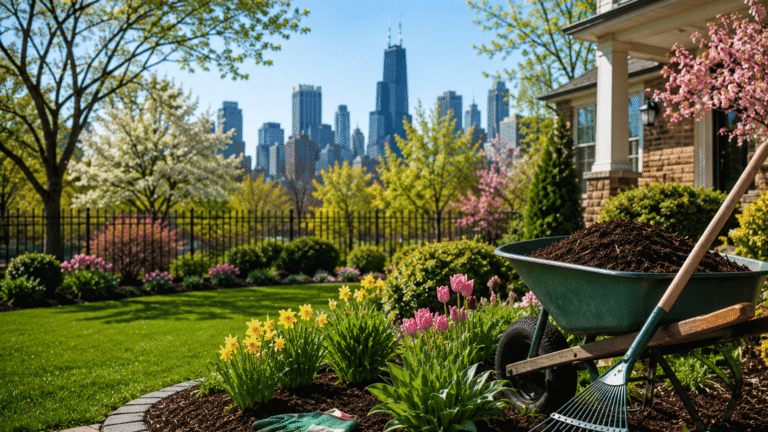
Chicago homeowners know that winter can be hard on a landscape. Freezing temperatures, strong winds, snow, ice, road salt, and repeated changes between freezing and thawing can affect lawns, trees, planting beds, patios, walkways, and other outdoor features.
Preparing a property for winter isn’t simply about putting away outdoor furniture and removing the last leaves.
A thoughtful approach to winter landscape maintenance Chicago homeowners can rely on involves preparing plants for dormancy, maintaining healthy soil moisture, protecting vulnerable trees and shrubs, addressing drainage concerns, and checking hardscape features before severe weather arrives.
The goal isn’t to keep the landscape growing through winter. Instead, the objective is to help the property enter the dormant season in good condition, so it has a better opportunity to recover when spring returns.
University of Illinois Extension recommends paying particular attention to moisture levels around trees and shrubs before the ground freezes. Newly planted trees and evergreen plants can be especially vulnerable to winter moisture loss.
Why Winter Preparation Matters in Chicago
Winter weather can create several different types of landscape stress. Freeze-thaw cycles can affect soil and hardscape materials, while winter winds can increase moisture loss from evergreen foliage.
Snow accumulation can weigh down branches, and de-icing materials used around sidewalks and driveways can affect nearby plants. Chicago properties also vary considerably.
A small urban yard may have plants exposed to reflected heat, wind, and road salt, while a larger residential property may have extensive lawns, mature trees, planting beds, patios, and drainage systems.
That’s why effective Chicago winter landscaping should be based on the actual property rather than a one-size-fits-all checklist.
Start With a Complete Property Inspection
Before completing winter preparation, walk around the property and look for existing problems.
Pay attention to:
- Broken or hanging branches
- Damaged tree bark
- Bare or stressed lawn areas
- Standing water
- Clogged drains and gutters
- Uneven pavers
- Cracked concrete
- Loose retaining-wall materials
- Exposed irrigation components
- Plants located near heavily salted areas
Addressing problems before winter becomes severe can make maintenance easier and reduce the likelihood of additional damage.
Drainage deserves particular attention. Water that repeatedly collects around patios, walkways, planting beds, or foundations can become more problematic when temperatures fluctuate.
Prepare the Lawn Before Dormancy
Chicago lawns commonly contain cool-season turfgrass, which naturally slows its growth as temperatures decline. Fall lawn care should focus on helping the turf enter winter in healthy condition rather than forcing unnecessary growth.
One important task is keeping leaves and debris from accumulating heavily over the lawn. A thick layer of leaves can block light and airflow and may contribute to unhealthy turf conditions under prolonged wet or snowy conditions.
Continue mowing while the grass is actively growing, but avoid treating the final mowing height as a universal number for every lawn. Turf species, site conditions, and local recommendations should be considered.
Fertilization should also be based on the lawn’s needs rather than simply applying products because winter is approaching. Illinois Extension notes that lawn-care timing depends on grass type and seasonal growth patterns.
Give Trees and Shrubs the Attention They Need
Trees and shrubs are among the most important features to prepare before winter. A healthy root system and adequate soil moisture can help plants withstand winter stress.
Illinois Extension recommends continuing to provide water when natural rainfall is insufficient until the ground freezes, with particular attention to newly planted trees and evergreen plants.
Inspect trees for:
- Dead branches
- Broken limbs
- Cracks
- Weak attachments
- Damage from previous storms
Remove hazardous dead or damaged branches when appropriate, but avoid unnecessary pruning simply because winter is approaching.
Illinois Extension specifically advises against rushing into general fall pruning because encouraging new growth late in the season can leave that growth vulnerable to winter damage.
Large branches or trees near structures and utility lines should be evaluated by qualified professionals.
Protect Evergreens From Winter Drying
Evergreen shrubs and trees can face a different challenge from deciduous plants because they retain foliage throughout winter. Cold temperatures don’t eliminate moisture loss. Wind and sunlight can cause evergreen foliage to lose water while frozen soil limits the plant’s ability to replace that moisture.
This condition is commonly referred to as winter desiccation or winter burn. Adequate soil moisture before the ground freezes is one of the important preventive measures. Exposed plants may also benefit from wind protection such as a properly installed burlap screen.
Protection should be tailored to the specific plant. Wrapping every plant unnecessarily can create other problems, so homeowners should identify which plants actually require protection.
Use Mulch Correctly
Mulch can be an important part of landscape winterization. Organic mulch helps moderate soil temperature and conserve moisture. University of Illinois Extension recommends an approximately 2-to-4-inch mulch layer around trees and shrubs while keeping mulch away from the trunk itself.
Avoid creating a mound of mulch directly against tree trunks. The objective is to insulate the root zone, not bury the trunk. A properly applied mulch layer can also reduce rapid soil-temperature changes caused by winter weather.
Inspect Drainage Before Winter
Drainage problems shouldn’t be ignored until spring.
Check:
- Downspouts
- Catch basins
- Drainage channels
- Low areas of the lawn
- Patio edges
- Walkways
- Areas surrounding the foundation
Make sure leaves and debris aren’t blocking water pathways. Poor drainage can create problems throughout the year, but winter adds another variable because water can freeze and expand.
If a property consistently develops standing water, the solution may involve grading or a dedicated drainage system rather than simply removing the water after each storm.
For significant drainage issues, professional landscape maintenance Chicago services can evaluate the property and determine whether corrective work is necessary.
Prepare Patios, Walkways, and Hardscapes
Hardscape surfaces should also be inspected before winter.
Look for:
- Loose pavers
- Cracks
- Settlement
- Damaged joints
- Erosion
- Poor drainage
- Broken steps
Small problems can become more noticeable after repeated freezing and thawing. If a patio or walkway requires sealing, always follow the specific manufacturer’s application requirements regarding temperature, moisture, and curing conditions.
Applying a product outside its recommended conditions can produce poor results.
Be Careful With Road Salt and De-Icers
Salt is a common winter concern for Chicago properties. De-icing materials can reach lawns and planting beds through runoff or snow placement. Sensitive plants located alongside sidewalks and driveways may therefore experience additional stress.
University of Illinois Extension recommends considering salt tolerance when selecting plants near roads and sidewalks and notes that protective screens can help reduce salt spray and winter wind exposure.
Use de-icing products according to their labels and avoid excessive application. Where appropriate, physical snow removal and traction materials can reduce reliance on chemical de-icers.
What Should Be Done During Winter?
Winter maintenance doesn’t completely stop once preparation is finished. After major snow, ice, wind, or temperature events, inspect the property when conditions are safe.
Check for:
- Broken branches
- Damaged shrubs
- Snow-loaded limbs
- Blocked drainage
- Shifting hardscape
- Exposed plant protection
- Salt accumulation
Evergreens and newly planted trees may require watering during suitable winter warm spells when the soil isn’t frozen and natural precipitation has been inadequate.
Regular observation makes it easier to identify problems before they become larger spring repairs.
When Should You Hire Professional Landscape Maintenance?
Some winter-preparation tasks are straightforward, but larger properties and complicated landscapes may require professional expertise.
Professional help can be particularly useful for:
- Large-scale fall cleanup
- Tree and shrub preparation
- Irrigation winterization
- Drainage problems
- Hardscape repairs
- Large planting beds
- Difficult pruning
- Winter protection for valuable plants
- Snow and ice management
A professional winter landscaping service can also help coordinate seasonal tasks so important preparation isn’t left until the first major freeze.
Frequently Asked Questions
When should I start preparing my Chicago landscape for winter?
Begin evaluating the property during fall and complete important preparation before the ground remains consistently frozen. Timing depends on weather, plant conditions, and the specific maintenance tasks involved.
Should I water trees and shrubs before winter?
Yes, when natural rainfall is insufficient and the ground isn’t frozen. Newly planted trees and evergreen plants deserve particular attention because they can be more susceptible to winter moisture stress.
Should I prune everything before winter?
No. Avoid unnecessary late-season pruning. Dead or damaged branches can be addressed, while many routine pruning tasks are better scheduled according to the plant’s growth and flowering characteristics.
Does mulch protect plants during winter?
Properly applied organic mulch can help conserve soil moisture and moderate soil-temperature fluctuations. Keep mulch away from tree trunks and plant stems.
How can I protect evergreen shrubs?
Start with adequate soil moisture and evaluate whether exposed plants need wind protection. Burlap screens can help in appropriate situations, particularly where winter wind and sun create additional exposure.
Can winter damage my patio?
Yes. Moisture, freezing temperatures, thawing, and existing cracks or settlement can contribute to hardscape problems. Inspecting and repairing issues before winter can help reduce potential damage.
Final Thoughts
Successful winter landscape maintenance Chicago homeowners invest in begins before the first major snowstorm. Preparing the lawn, checking drainage, maintaining healthy soil moisture, protecting vulnerable plants, inspecting trees, and addressing hardscape problems can help your property enter winter in better condition.
The most effective approach isn’t necessarily to perform every task at once. Instead, identify the features that are most vulnerable on your property and complete the appropriate preparation at the right time.
A thoughtful winterization plan can protect your landscape investment while making spring cleanup and recovery easier. Whether your property includes a small urban garden or a large residential landscape, consistent seasonal care helps maintain its appearance, function, and long-term value.
Ready to prepare your property for the Chicago winter? Contact our landscaping team to discuss professional seasonal maintenance, winter preparation, lawn care, planting protection, and hardscape care tailored to your property.